Platform comparison
| Platform | YES odds | NO odds | Fee | KYC | Settlement | |
|---|---|---|---|---|---|---|
Polymarket (via PolyGram) Pick polygram.ink (preferred broker) |
50% | 50% | 0% (USDC on-chain) | No-KYC up to $1,500 | USDC, auto via UMA oracle | View on Polymarket → |
Polymarket (direct) polymarket.com |
50% | 50% | 0% | Geo-blocked in US/UK/EU | USDC, on-chain | View on Polymarket → |
Kalshi kalshi.com |
— | — | Up to 7% per trade | US-only, KYC required | USD | View on Polymarket → |
Betfair Exchange betfair.com |
— | — | 2-5% commission | Full KYC from first trade | GBP / EUR | View on Polymarket → |
Manifold Markets manifold.markets |
— | — | Play-money (mana) | None — play-money | Mana (no cash-out) | View on Polymarket → |
Outcome probabilities
Current market-implied probability for each outcome, from the live order book.
| Outcome | Probability |
|---|---|
| Player G | 50% |
| Player H | 50% |
| Player Q | 50% |
| Player R | 50% |
| Player AA | 50% |
| Player AB | 50% |
| Player AG | 50% |
| Player AO | 50% |
| Player AP | 50% |
| Player A | 50% |
| Player B | 50% |
| Player I | 50% |
| Player J | 50% |
| Player K | 50% |
| Player L | 50% |
| Player S | 50% |
| Player T | 50% |
| Player U | 50% |
| Player V | 50% |
| Player AC | 50% |
| Player AD | 50% |
| Player AE | 50% |
| Player AF | 50% |
| Player AH | 50% |
| Player AI | 50% |
| Player AQ | 50% |
| Player AR | 50% |
| Player AS | 50% |
| Player AT | 50% |
| Player E | 50% |
| Player F | 50% |
| Player O | 50% |
| Player P | 50% |
| Player Y | 50% |
| Player Z | 50% |
| Player AK | 50% |
| Player AM | 50% |
| Player AN | 50% |
| Player AW | 50% |
| Player AX | 50% |
| Player C | 50% |
| Player D | 50% |
| Player M | 50% |
| Player N | 50% |
| Player W | 50% |
| Player X | 50% |
| Player AJ | 50% |
| Player AL | 50% |
| Player AU | 50% |
| Player AV | 50% |
| Other | 50% |
| Cameron Boozer | 22% |
| AJ Dybantsa | 18% |
| Caleb Wilson | 18% |
| Darryn Peterson | 16% |
| Darius Acuff Jr. | 12% |
| Mikel Brown Jr. | 6% |
| Keaton Wagler | 5% |
| Yaxel Lendeborg | 2% |
| Brayden Burries | 1% |
| Nate Ament | 1% |
| Joshua Jefferson | 0% |
| Kingston Flemings | 0% |
| Morez Johnson Jr. | 0% |
| Hannes Steinbach | 0% |
| Christian Anderson | 0% |
| Allen Graves | 0% |
| Cameron Carr | 0% |
| Alex Karaban | 0% |
| Koa Peat | 0% |
| Bennett Stirtz | 0% |
| Karim López | 0% |
| Sergio De Larrea | 0% |
| Tarris Reed Jr. | 0% |
| Dailyn Swain | 0% |
| Jayden Quaintance | 0% |
| Zuby Ejiofor | 0% |
| Aday Mara | 0% |
| Ebuka Okorie | 0% |
| Labaron Philon Jr. | 0% |
| Chris Cenac Jr. | 0% |
Market context
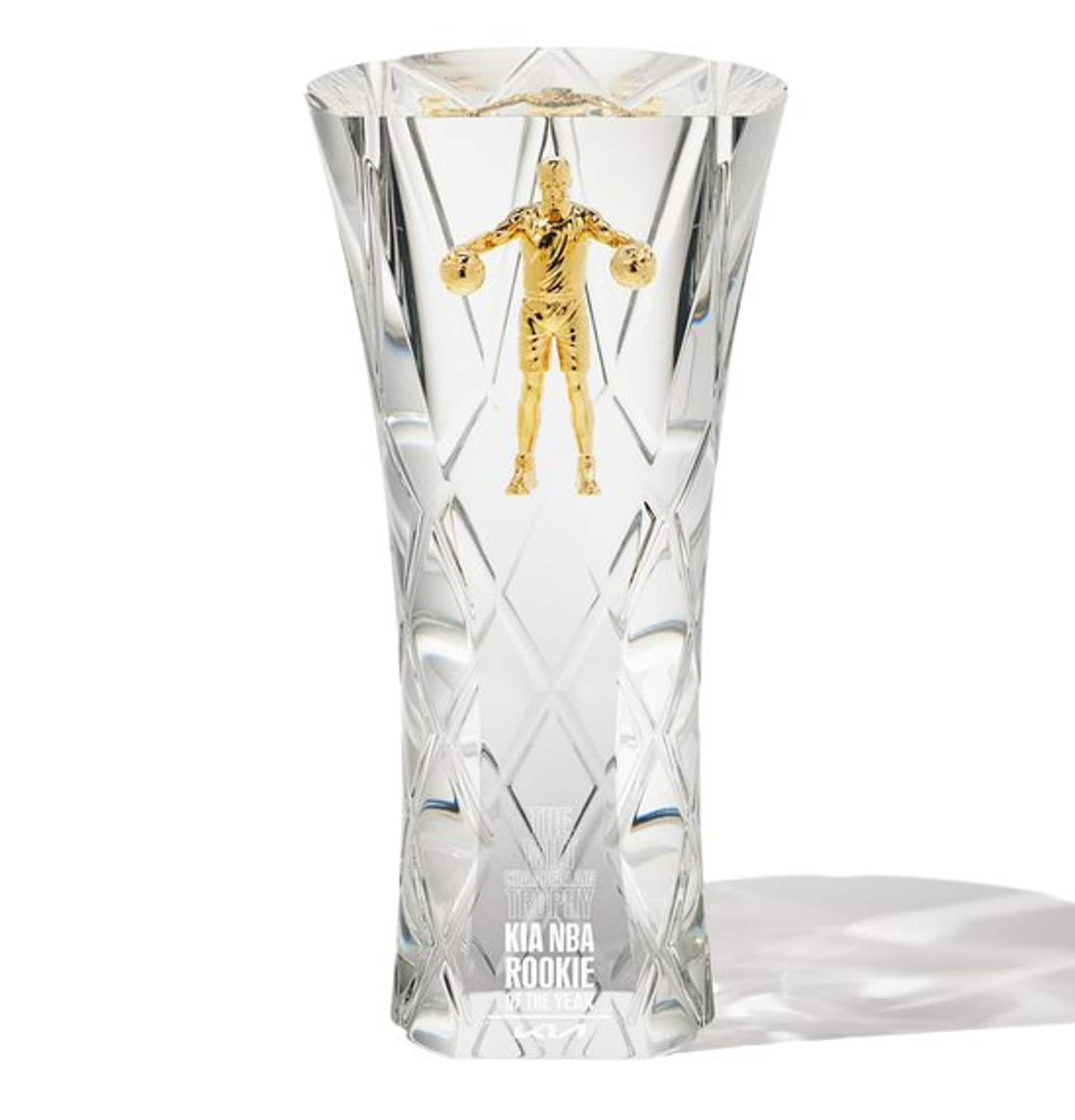
The 2026–27 NBA Rookie of the Year award will be decided by the standout performer among the league’s newest recruits, with the 2026 draft class now officially set and players beginning their professional careers. Duke standout Cameron Boozer, selected third overall by the Memphis Grizzlies, has emerged as the early favourite, while Washington Wizards’ AJ Dybantsa (No. 1) and Utah Jazz’s Darryn Peterson (No. 2) trail closely behind in the odds [1][3].
Historically, Rookie of the Year races have often favoured high-draft picks who land in supportive environments, though outliers like Tyrese Haliburton and LaMelo Ball show that team context and opportunity can override draft position. In the 2024–25 season, Cooper Flagg’s odds shifted dramatically from +230 to -260 after a late-season surge, illustrating how volatile these markets can be [2]. The current 0% implied probability on prediction markets contrasts sharply with FanDuel’s +240 on Boozer, suggesting a meaningful divergence between sportsbook sentiment and crowd-implied pricing [1][5].
Traders should monitor early-season performance metrics, injury reports, and coaching decisions that could elevate or suppress a rookie’s visibility. Darius Acuff Jr., the No. 7 pick with Sacramento, is cited as offering the best early betting value at +550, reflecting strong upside despite lower draft status [3][6]. As the season progresses, live betting lines will adjust rapidly, making real-time data essential for informed positioning [5].
Methodology
Methodologically we separate two layers: the live probability (Polymarket mid-price) and the platform attributes (fee, KYC, settlement currency, payment rails). That keeps the comparison honest — a single canonical probability across the row, with the venue-by-venue trade-offs spelt out in the columns next to it.
Resolution & payout
At resolution the UMA oracle takes over: a proposer posts the outcome with a bond, any token holder can dispute within two hours. Without dispute the result is accepted and the smart contract distributes USDC instantly.
On Kalshi (CFTC-regulated) resolution runs through their in-house clearing engine in USD. Betfair Exchange settles after match end in the account's local currency. Manifold pays no cash — only its in-platform "mana" currency.
FAQ
- Is this market available outside the US?
- Polymarket itself is geo-blocked in the US/UK/EU. Always check the legal status of prediction markets in your jurisdiction before trading.
- How does resolution work?
- Through the UMA Optimistic Oracle on Polygon: a proposer submits the outcome, a two-hour challenge window opens, and USDC payouts settle automatically once the result is final.
- What's the difference between YES and NO shares?
- A YES share pays $1.00 if the event happens, $0 otherwise. A NO share pays $1.00 if the event doesn't happen. The market price between 0¢ and 100¢ is the implied probability.
- How fast are USDC deposits?
- Polygon credits deposits after 12 confirmations — usually under 30 seconds. Withdrawals follow the same path and land back in your wallet within minutes.
- How reliable are the quoted odds?
- The YES/NO percentages are the live mid-prices of the Polymarket order book. On deep markets they move every few seconds; on thinner ones you'll see short plateaus.
%22%2F%3E%3Cpath%20d%3D%22M%206%2066%20A%2026%2026%200%200%201%2058%2066%22%20fill%3D%22%23E6B98D%22%20opacity%3D%220.9%22%2F%3E%3Ccircle%20cx%3D%2232%22%20cy%3D%2226%22%20r%3D%2222%22%20fill%3D%22%23F5CBA7%22%2F%3E%3Cpolygon%20points%3D%2216%2C18%2020%2C4%2024%2C18%22%20fill%3D%22%2322d3ee%22%2F%3E%3Cpolygon%20points%3D%2224%2C18%2028%2C3%2032%2C18%22%20fill%3D%22%2322d3ee%22%2F%3E%3Cpolygon%20points%3D%2232%2C18%2036%2C3%2040%2C18%22%20fill%3D%22%2322d3ee%22%2F%3E%3Cpolygon%20points%3D%2240%2C18%2044%2C4%2048%2C18%22%20fill%3D%22%2322d3ee%22%2F%3E%3C%2Fsvg%3E) and
and%22%2F%3E%3Cpath%20d%3D%22M%206%2066%20A%2026%2026%200%200%201%2058%2066%22%20fill%3D%22%23E6B98D%22%20opacity%3D%220.9%22%2F%3E%3Ccircle%20cx%3D%2232%22%20cy%3D%2226%22%20r%3D%2222%22%20fill%3D%22%23F5CBA7%22%2F%3E%3Cpath%20d%3D%22M%2010%2018%20Q%2016%204%2026%2010%20Q%2020%202%2032%206%20Q%2044%202%2038%2010%20Q%2048%204%2054%2018%22%20stroke%3D%22%2322d3ee%22%20stroke-width%3D%224%22%20fill%3D%22none%22%20stroke-linecap%3D%22round%22%2F%3E%3C%2Fsvg%3E)
Trade NBA: 2026-27 Rookie of the Year on PolyGram
Live order book, 0% fees, USDC settlement in seconds.
Open live market →